Insights

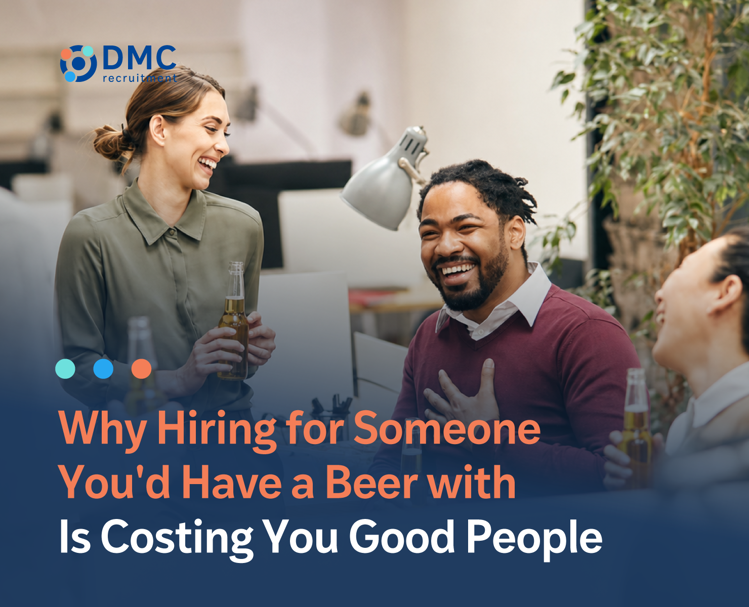
The "beer test", recruiting someone based on whether you'd enjoy having a drink with them on a Friday afternoon, has become an informal gold standard in modern hiring.
It feels completely natural.
They're supposed to collaborate well, strengthen the team, and maintain a positive workplace culture, right?
Wrong.
I work with business owners and hiring managers every week who treat the "beer test" as a sacred strategy. Except, it's not.
When you prioritise culture fit hiring, you unintentionally exclude high-performing candidates who bring different experiences, ideas, and perspectives to the table. And in doing so, you build an echo chamber.
Organisations that continue to grow value shared principles over shared interests, and, in turn, create teams that challenge assumptions, question opinions, and adapt to change.
I've seen this play out repeatedly. A hiring panel dismisses a candidate with an atypical career trajectory, someone who'd moved between industries, changed roles laterally, worked remotely before it was normal. The feedback is always subjective: "They won't gel with our team." "They can't keep up with the way we work." "They just didn't feel like a natural fit."
That's recruitment bias.
What's actually happening is this: that candidate's difference feels uncomfortable. And when hiring managers confuse discomfort with misalignment, they reject exactly the people who would strengthen their team.
I placed a candidate last year who'd spent eight years in logistics before moving into commercial finance. The hiring manager's first instinct was "too far from core experience." Six months in, that same candidate had restructured the supplier payment process and recovered $400K in working capital. The unfamiliar perspective wasn't a liability, it was the whole point.
When you hire for familiarity, you favour candidates with similar backgrounds, personalities, or communication styles. Before you know it, your team lacks diversity of thought. They approach every problem from the exact same angle. There's no friction, which sounds good until you realise there's also no original thinking or genuine innovation.
Building a diverse team doesn't mean lowering your standards. You just have to recognise that people with different experiences keep your business alive.
The strongest teams I've worked with didn't agree on everything. But they weren't afraid to challenge the status quo. Ideas were tested. Opinions were challenged. They approached each problem from different angles.
Cognitive diversity encourages healthy debate and fresh thinking. Each team member brings solutions based on their professional and personal experiences, helping them spot opportunities and risks others miss. Instead of reinforcing existing thinking, they create an environment where ideas are tested, refined, and improved through constructive discussion.
But when everyone in the room thinks the same way? Risks get missed. Opportunities get ignored. Innovation drops.
Team chemistry matters. I'm not denying that. But getting along in the workplace doesn't depend on shared interests and personalities.
An extrovert who lives for team karaoke and an introvert who reads weekends can work together brilliantly, as long as their values and work ethic align. Better still, they bring unique viewpoints and working styles that strengthen problem-solving.
That's where value-based hiring comes in. It focuses on shared values, not shared hobbies, personalities, or social preferences.
I encourage employers to list the behaviours and principles that define their workplace culture and hire for those:
How do you expect people to approach new problems?
What should someone do when they find one coworker undermining another?
How do they respond to feedback?
These questions develop objective criteria for hiring. You have a benchmark to assess candidates against.
A candidate can be charming and personable. But what happens when the workplace shifts?
New technologies emerge. Market trends evolve. Customer expectations shift. Faster than most organisations can respond.
That likeable hire who seemed like a perfect fit? They freeze when the goalposts move. The ideal employee isn't someone who fits your current culture like a glove. It's someone who learns quickly, responds positively to change, and grows with your business.
Test for adaptability. Push candidates into real-world scenarios:
What did you do when a project's deadline shifted suddenly?
How did you react to new technology adoption at your previous workplace?
Did you have to learn a new skill under pressure?
Their answers reveal hiring potential far better than casual chat ever will. I once interviewed a candidate who'd been rejected by another firm for "not understanding their systems." Turns out she'd mastered four different accounting software packages in three years. The hiring manager had mistaken inexperience with their specific tool for inflexibility. We hired her. She's still there, and she's adapted to two major system overhauls since.
The best interview questions reveal how a candidate thinks, not what they claim about themselves.
That's why I like to ask: "Can you tell us about a time you challenged the way your team worked, and what happened as a result?"
It's a simple question, but the answer tells you everything informal conversation can't:
Are they comfortable challenging broken processes?
How do they navigate difficult conversations?
When others didn't accept their suggestions, did they push harder to influence, or did they give up?
Their response shows you their confidence, collaboration style, and values. You'll learn whether they think critically or simply comply.
Many business leaders see culture as something to protect. That's why they hire people who are all the same.
I see it differently. The strongest organisational cultures are built intentionally through shared values, strong leadership, and clear expectations. And they evolve.
I've worked with organisations that embraced different perspectives instead of resisting them. The difference is remarkable. Their teams adapt faster, challenge outdated processes, and make better decisions because they're drawing on a wider range of experiences. That's what helps them attract top talent and drive innovation.
Start with a recruitment process that evolves with your business goals and growth stage. The qualities you looked for as a 10-person startup won't be the same at 100 people. If your hiring criteria hasn't evolved, your business won't either.
The "beer test" can make hiring decisions easier. It also builds stagnant, predictable teams.
Instead, assess capability, shared values, and long-term potential. Replacing culture fit hiring with values alignment brings diverse perspectives and ideas to your team. It helps organisations build adaptable teams without losing their identity.
That's exactly what we do at DMC. We identify candidates who challenge thinking, not just reinforce it. If you're building a team that adapts, innovates, and performs, not just gels, let's talk about what that looks like for your business.